
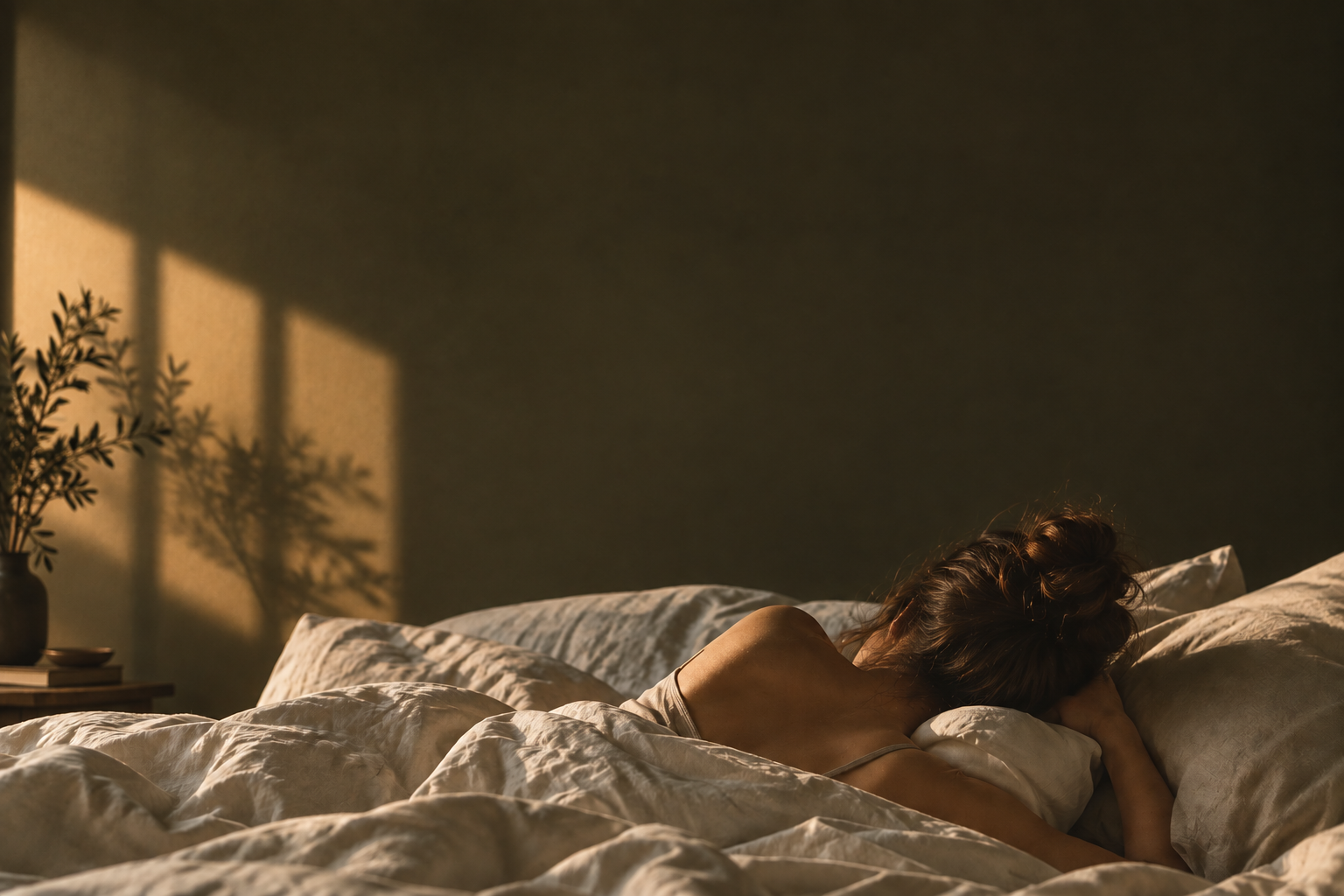
We design our homes with an audience in mind.
There is a room in your home you would rather close the door to than tidy before letting someone see it.
The kitchen has been scrubbed immaculately.
The living room’s been styled with the throw pillows nobody is allowed to actually use and a candle you light only when people come over.
But then there's your bedroom. The “laundry chair”. The half-empty water glass. The charger stretched across the floor. The clothes that aren't clean enough to go back in the closet but somehow aren't dirty enough for the hamper. Maybe there's an exercise bike under there somewhere.
For a room that occupies such an intimate place in our lives, the bedroom has a strange tendency to become the place where everything else ends up.
Which is especially interesting when you consider how long it took us to get one.
The bedroom wasn't always a bedroom
The private bedroom as we understand it today isn't some timeless feature of human life.
Historically, where people slept, and who they slept near, depended enormously on culture, class, wealth and architecture.
In medieval European homes, rooms weren't always assigned the single functions we're accustomed to now. A chamber could be used for sleeping, private business and recreation. As domestic architecture evolved, separate rooms increasingly created privacy between different parts of household life.
And even when dedicated bedchambers existed, bedroom didn't necessarily mean private, the bedchamber could be a place of ceremony, status and visitors.
The bed itself sometimes created the privacy the room didn't. Curtains around canopy beds weren't simply decorative; they could provide enclosure and warmth inside a larger space.
In other words, the thing we now take completely for granted, “my bedroom”, represents a fairly remarkable amount of personal territory.
A room with a door.
A room we can close.
A room the rest of the world doesn't automatically get access to.
For centuries, privacy was a luxury.
Now that we have it, we use it to hide the laundry.
The room nobody sees
Maybe that's part of the reason bedrooms get neglected. They're private.
Think about where we tend to put our attention, and our money, when we're creating a home.
The kitchen.
The living room.
The dining room.
The entryway.
These are the rooms that represent us. People walk into them. They sit in them. They notice the countertops. They see the art. They compliment the couch.
Nobody comes over for dinner and asks for a tour of your bedroom. Thank God.
Unless the evening is going particularly well!
So the bedroom quietly slips down the priority list, it becomes functional rather than considered.
And because we can close the door, it becomes incredibly convenient storage for everything we don't want the rest of the house to know about.
Guests coming over?
Throw it in the bedroom.
Door closed.
Ta-da, house clean.
Except you still live in there
That's the funny part.
The room we're least concerned about presenting to other people might be the room that sees the most private versions of us.
We sleep there. Get dressed there. Get naked there. Have sex there. Get sick there. Cry there.
Read there. Scroll there. Argue there. Recover there. Lie awake staring at the ceiling there.
It's where we begin the day before we've presented ourselves to anyone and where we return when we're finished presenting ourselves to everyone.
Your bedroom knows things about you your living room never will. And yet when we talk about bedroom design, the conversation often becomes strangely superficial.
What colour should the walls be?
Should the nightstands match?
What bedding looks expensive?
But maybe the more interesting question is:
What does this room need to do for the person who actually lives here?
Design the room nobody sees
I'm not suggesting your bedroom needs a renovation.
Or that the laundry chair needs to be arrested.
Mine has committed crimes too.
I'm more interested in what happens when we stop thinking about the bedroom as the room nobody sees and start thinking about it as the room nobody needs to see.
Those are very different ideas.
One implies neglect.
The other implies freedom.
Because if nobody else is coming in here, maybe this is the one room that doesn't have to impress anyone.
It doesn't need the fashionable chair.
It doesn't need the trendy paint colour.
It doesn't need to photograph beautifully.
It can be dark.
Minimal.
Layered.
Strange.
Sensual.
Completely impractical to anyone except you.
The bedroom took a very long time to become truly private territory.
Maybe we've been thinking about that privacy backwards.
Instead of asking why we'd bother designing a room nobody else sees, maybe that's exactly why we should.
- Dawn Melody
Sleep Architect + Founder, Sleep State of Mind
LIMINAL
THE SPACE BETWEEN AWAKE AND ASLEEP
