
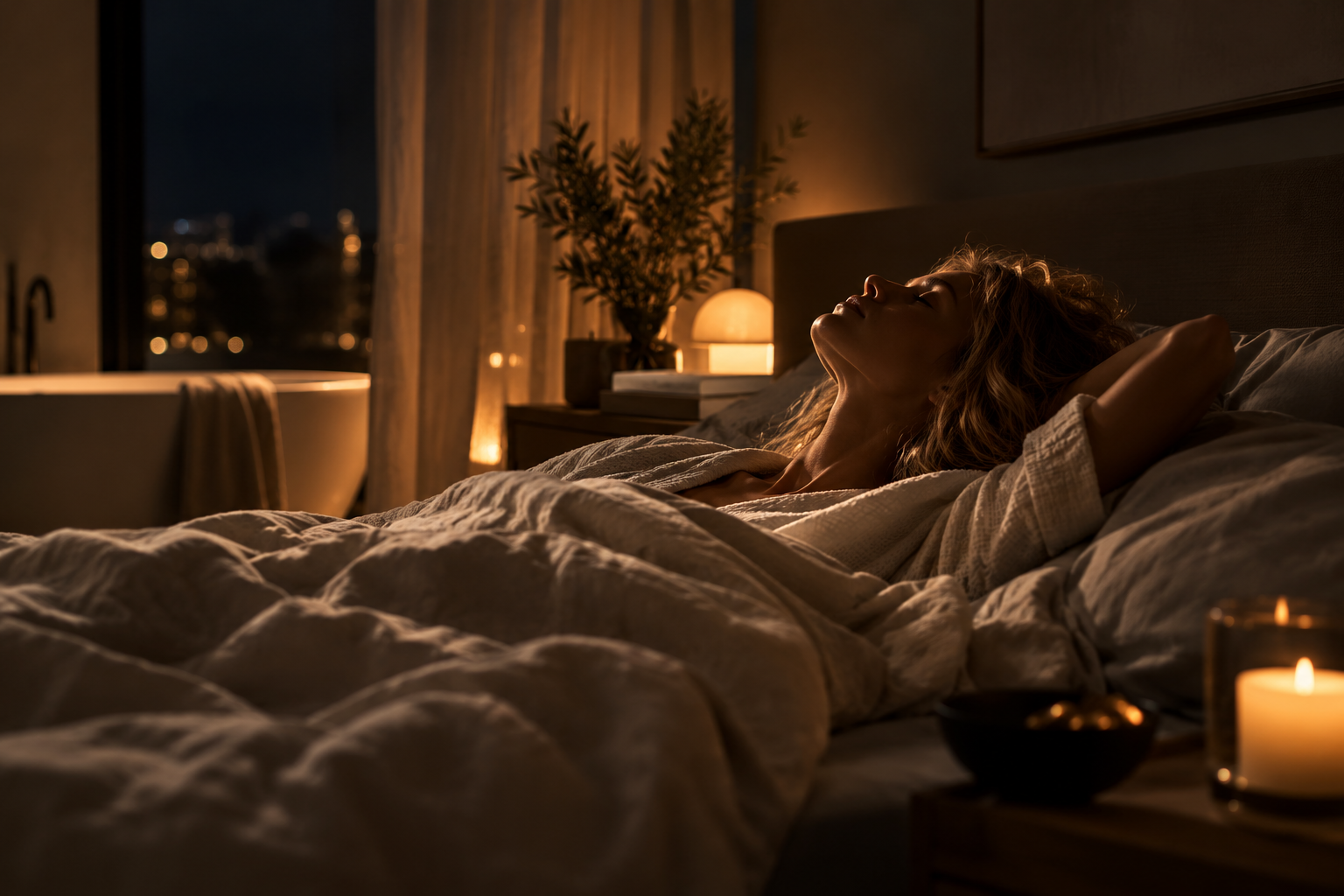
You finally sit down.
Work is done. Dinner is over. Nothing particularly urgent requires your attention.
You could just... relax.
Except almost immediately, your brain starts making suggestions. Maybe you should put the laundry in. Answer that message. Tidy something. Do the skincare you haven't done yet.
Or perhaps, since you're trying to relax, you should do something relaxing. Meditate. Stretch. Journal.
And somehow the simple act of stopping has acquired an itinerary.
Apparently, even relaxing requires supervision now.
Rest has become productive.
We've become remarkably good at turning almost anything into a form of self-improvement, including the things designed to give us a break from improving ourselves.
Wellness hasn't exactly helped.
There are now countless ways to optimize the final hours of the day. We can track our sleep, complete a meditation, perfect a skincare routine, monitor our screen time and build an evening ritual so comprehensive it requires its own checklist.
None of those things are inherently bad. Some are genuinely useful. I do plenty of them myself.
The problem isn't the ritual.
It's the moment this feels good quietly becomes this is what I'm supposed to be doing.
Because once relaxation has rules, it can also be done incorrectly.
Maybe you stayed on your phone too long. Maybe you didn't wind down early enough. Maybe you skipped the meditation. Maybe your watch informed you that despite your best efforts, you apparently slept terribly.
Suddenly, we've got a performance review before bedtime.
Maybe you don't have to earn it
There is another version of this that has nothing to do with wellness culture.
It's the belief that you'll relax when you're finished.
The problem is that adult life doesn't really have a finished state. There is almost always something that could be cleaned, answered, organized or prepared for tomorrow. If the requirement for stopping is that everything must first be done, we've created a finish line that continually moves away from us.
So we negotiate.
I'll sit down after I do this.
I'll watch the movie once that's finished.
I'll take the bath when I've dealt with that.
And when we finally do stop, doing nothing can feel strangely uncomfortable.
Not because we've forgotten how to sit on a couch.
Maybe because we've become accustomed to believing that stopping requires justification.
You cannot accomplish relaxation
This might be the part we keep getting backwards.
Relaxation isn't really something you can achieve through effort.
You can create conditions that make it easier.
A darker room might help. A bath might feel wonderful. Music might change the mood of the house. But eventually, you have to stop doing relaxation long enough to experience it.
There is a small amount of surrender involved.
Not in a particularly mystical sense. You don't need to commune with the universe.
Just in the very practical sense that you cannot simultaneously let go and keep checking whether you've let go correctly.
Sleep might be the clearest example.
We can influence the conditions around sleep enormously. But at some point, after all the preparation is finished, there is nothing left to do.
You cannot perform yourself unconscious.
Eventually, sleep requires your participation to end.
Maybe relaxation does too.
What if nothing comes from it?
We are accustomed to understanding our time through what it produces.
Even rest is often justified by its eventual return.
Rest now so you'll have more energy tomorrow. Take time for yourself so you don't burn out.
Relax because it will make you more productive later.
We've somehow managed to give doing nothing a business case, but there are parts of being alive that don't need to improve anything.
You can take the long bath because being submerged in hot water for an unreasonable amount of time feels incredible.
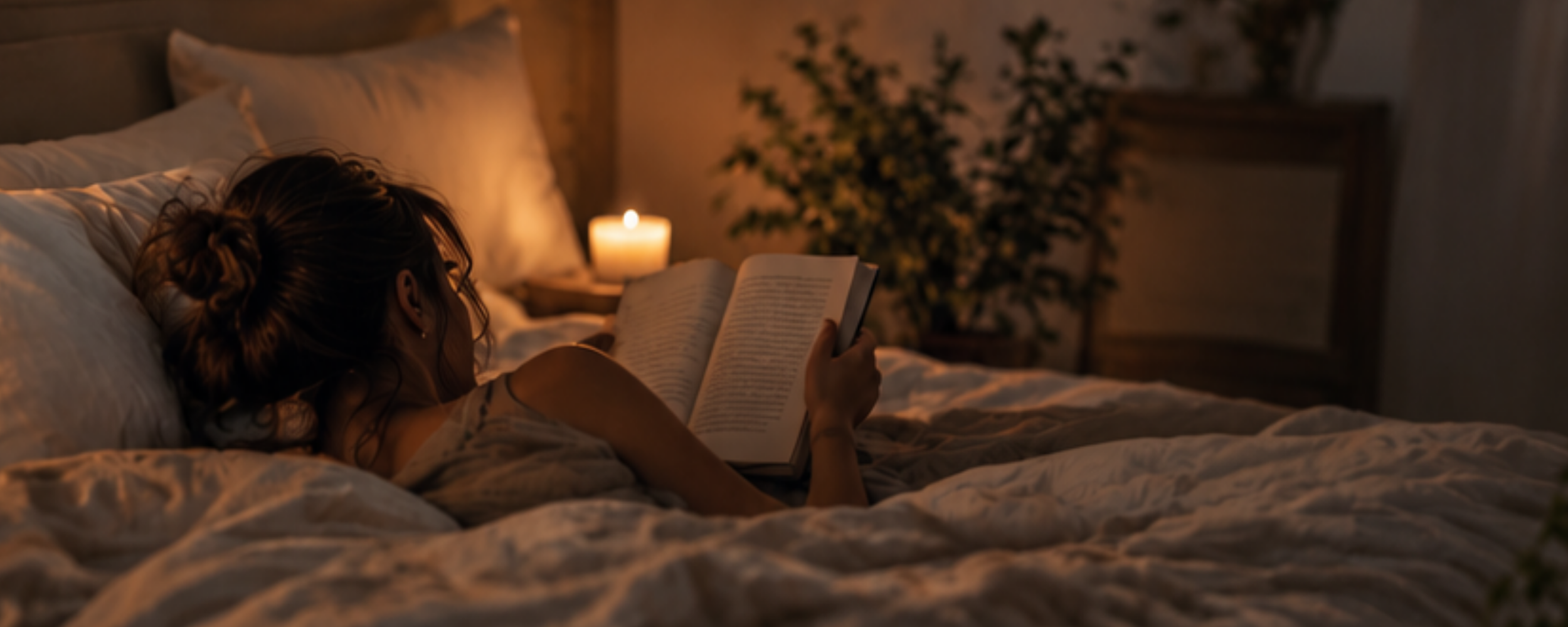
You can spend an evening reading something that teaches you absolutely nothing.
You can sit outside without counting the walk, tracking the minutes or turning the experience into evidence that you've taken care of yourself.
Nothing has to come from it.
That may be precisely what makes it rest.
You can just be done
That's the permission we're actually looking for.
Not permission to have the perfect evening, permission to stop trying to make the evening useful.
There will always be something you could be doing. And there will always be another ritual, practice or beautifully packaged product promising to help you become slightly calmer, healthier or better at resting, but don't mistake the ritual for the requirement.
You don't have to relax correctly.
You don't have to earn it.
And it doesn't have to accomplish anything.
-DAWN MELODY
Sleep Architect + Founder, Sleep State of Mind
LIMINAL
THE SPACE BETWEEN AWAKE AND ASLEEP
